
Stories drive change. But the wrong approach can harm the people we're trying to help.
A free 30-minute masterclass on ethical storytelling for changemakers, so we can activate policy reform, shift systems, and protect the lived experience advocates at the heart of our work.

Every week, people with lived experience share some of their most painful stories in service of change. Their testimony is what helps people understand the issues they're advocating for. Without these first-hand accounts, the advocacy, systems change, and momentum behind an issue can fall flat.
Media stories hinge on the human element. You can have all the data, research, and recommendations for change but without a face, a personal story, media will rarely touch it.
So every day, PRs, comms teams and campaign leads put these people in front of media with the best of intentions. And advocates who haven't yet found their place in the system wonder whether sharing their story is even worth the risk.
The problem is that our media landscape was designed to chase clicks, trigger emotion, and feed algorithms built for outrage, not to protect the person at the centre of the story.
This masterclass will help you prepare, plan, and support the advocates you work with — or to step forward yourself with clarity, preparation, and a clear-eyed understanding of the risks, the likely fallout, and how to minimise personal harm is essential.
What is this masterclass about?
In 30 minutes, we'll cover:
—The landscape: The challenges of the media environment, and what that means whether you're pitching a story, living one, or deciding whether to step forward at all.
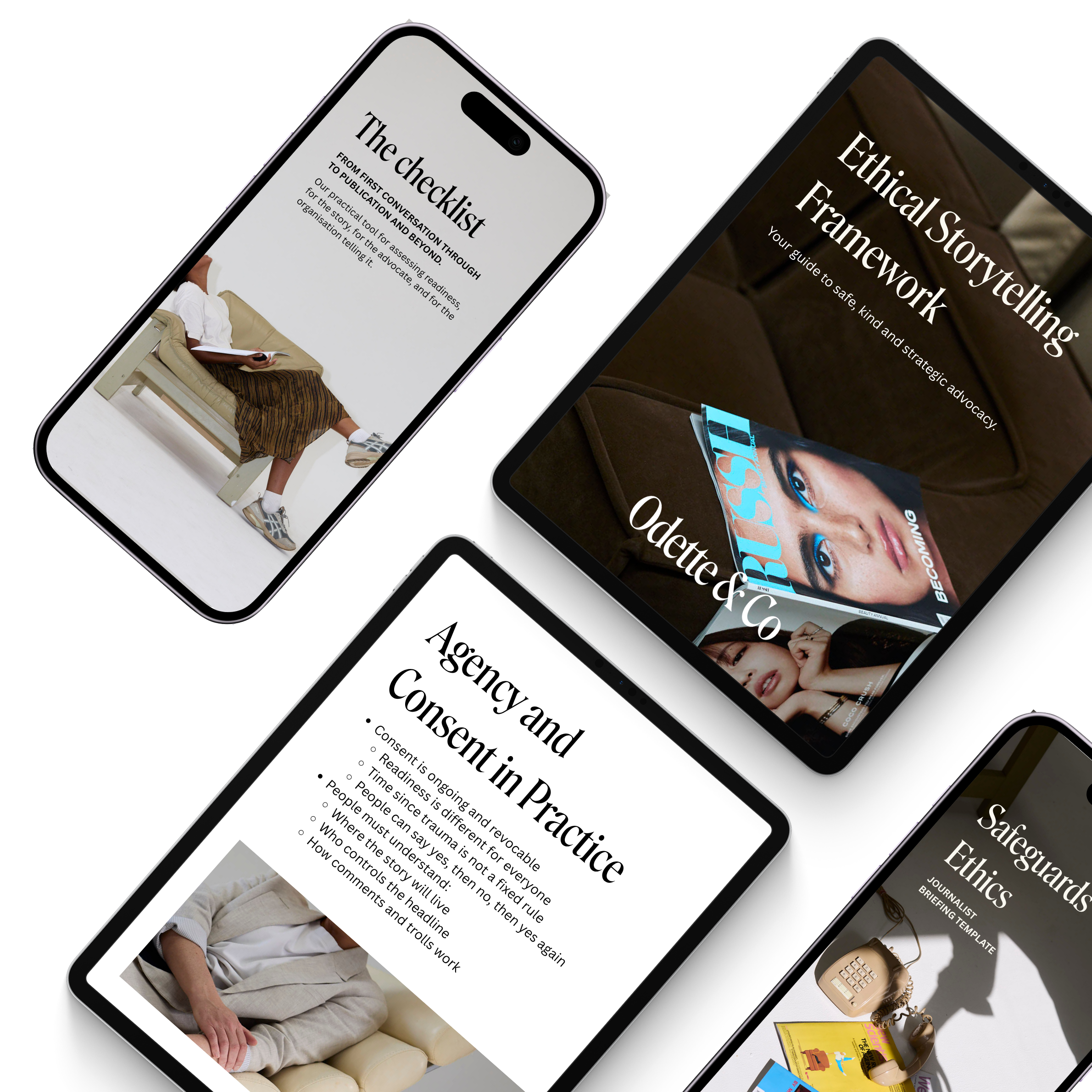
—The framework: What ethical storytelling actually looks like in practice: informed consent, proximity to trauma, de-identification, and how to move advocates from reactive case study to proactive systems-reform voice.
—The real stuff: What happens when a story goes live. The comments. The headlines you didn't write. The moments that catch people off guard and the preparation that makes the difference between an advocate having the energy to stay in the work or having to walk away.
—The checklist: Our practical tool for assessing readiness for the story, for the advocate, and for the organisation telling it.
About your host
Odette Barry is a publicist and ethical storytelling practitioner working at the intersection of advocacy, media, and social change.
Over years of working with organisations driving systems reform, Odette has developed a framework for storytelling based on hours of interviews, research and years of campaign management.
She's worked with media outlets, not-for-profits, and advocates navigating some of the most sensitive stories in public life, and has seen firsthand what happens when the model is done well — and what happens when it isn't.
This workshop is her distillation of those ideas, conversations, and hard lessons.